The Case Against Dark Matter
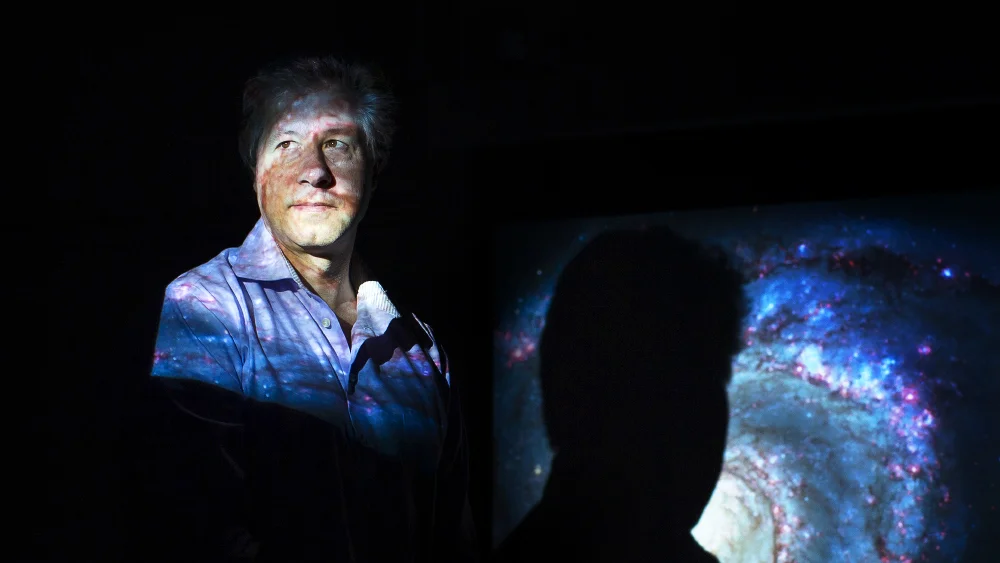
Building on previous work in Modified Nutonian Dynamics (MOND), Dutch theoretical physicist Erik Verlinde argues that dark matter does not exist. If he's right, there may be a more elegant solution to why stars on the outside of galaxies are spinning faster than initially predicted. His theory builds on other work which posits that gravity is an emergent holographic phenomenon, a manifestation of disruptions in dark energy by normal matter.

Quantum Gravity Research Could Unearth the True Nature of Time
Many leading physicists now consider space-time and gravity to be “emergent” phenomena: Bendy, curvy space-time and the matter within it are a hologram that arises out of a network of entangled qubits (quantum bits of information), much as the three-dimensional environment of a computer game is encoded in the classical bits on a silicon chip. “I think we now understand that space-time really is just a geometrical representation of the entanglement structure of these underlying quantum systems,” said Mark Van Raamsdonk, a theoretical physicist at the University of British Columbia.
What Sonic Black Holes Say About Real Ones
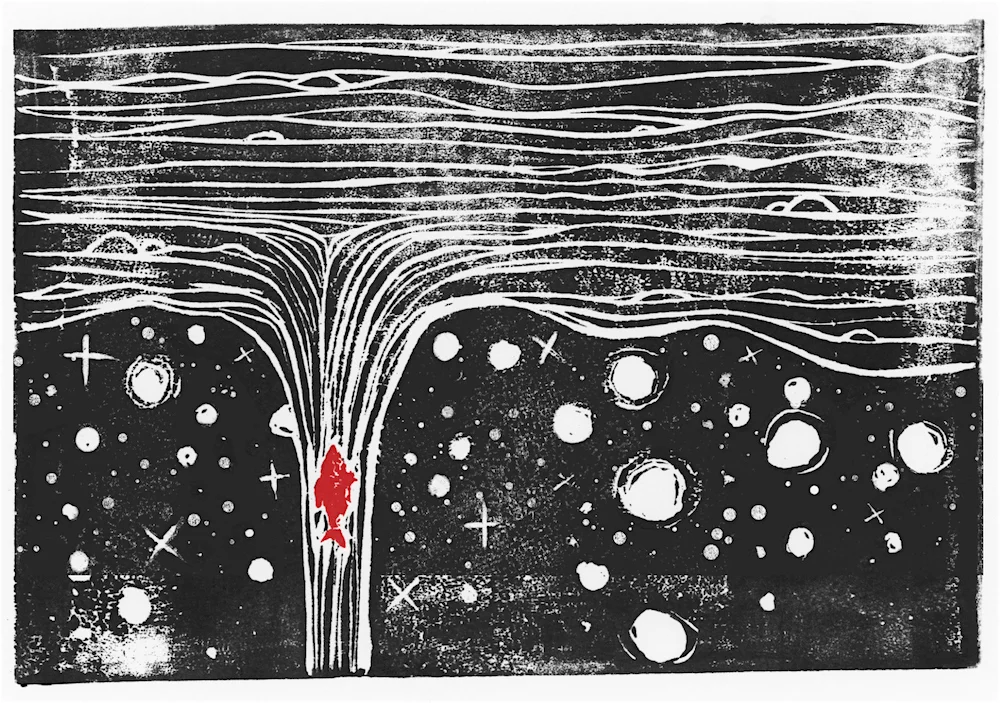
In a 1972 lecture at the University of Oxford, a young physicist named William Unruh asked the audience to imagine a fish screaming as it plunges over a waterfall. The water falls so fast in this fictitious cascade that it exceeds the speed of sound at a certain point along the way. After the fish tumbles past this point, the water sweeps its screams downward faster than the sound waves can travel up, and the fish can no longer be heard by its friends in the river above.