The US had Military Astro Spies?
Sure, we've all heard of the NASA astronaut Neil Armstrong who famously became the first human to set foot on the moon in July 1969. Armstrong was the first American civilian astronaut to fly into space in 1966. Before him, Alan Shepard was the first American, an air force test pilot, who flew in 1961. But what of the secret corps of military astronauts who were being trained in secret while attention was being put on the NASA Gemini, Mercury, and Apollo missions?
You may recall that in 1995 President Clinton declassified a cold-war era program for space-based surveillance of the Soviet Union and China, codenamed Carona. From 1959 through 1972, this program launched 144 satellites used to automatically take panoramic photographs of objects as small as a truck. However, many of these images were utterly useless shots of clouds. Something needed to be done to improve the value of the film being sent to orbit and back. It was an awkward moment in history where technology was out of sync with needs and manual intervention seemed the only option.
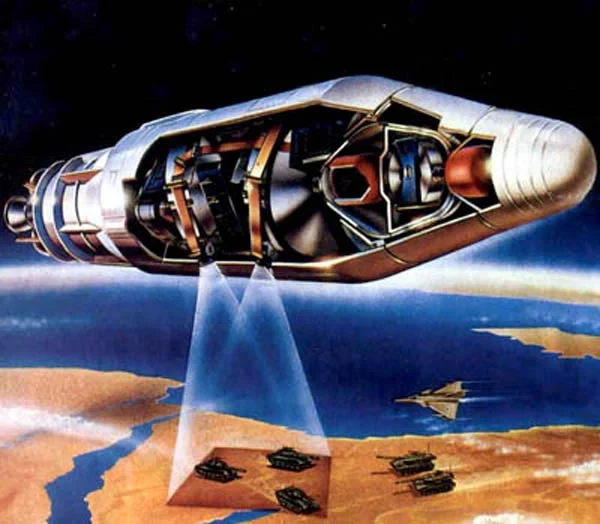
In 1963, a second program, under the cover story of a Manned Orbital Laboratory for scientific research, was launched. These astronauts were assembled from the ranks of the Air Force to manually identify targets and take photographs -- ideally between the clouds. After the 30-40 day missions, they would return to earth in a Gemini capsule.
Meanwhile the Soviets weren't going to let the cover story fool them and cold war pressure was ramping up. They began developing an even bigger space-complex which could remain in orbit for a whole year. Almaz, as the project was known, tested the psychological effects of human isolation for extended periods of time. Ultimately, the Soviets got even further than the Americans with three manned, and two successful missions before it was ultimately cancelled.